

Nigeria’s healthcare system is at a transition point, with stakeholders seeking ways to improve access and affordability through preventive care and digital transformation. For decades, millions of Nigerians have relied on out-of-pocket payments, often delaying care until it becomes critical.
Today, with less than 10 percent of the population covered by health insurance, the stakes are higher than ever as rising inflation, weak infrastructure and persistent distrust in insurance systems continue to widen the access gap.
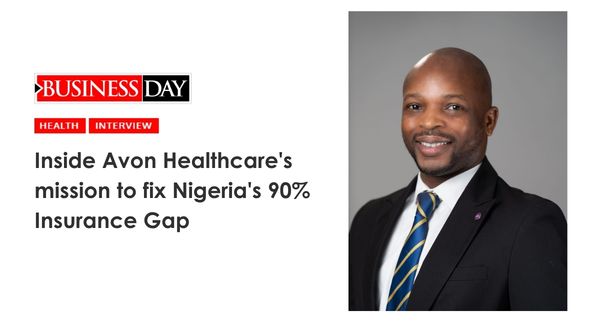
Within these complexities, Osakpamwan Imasogie, Chief Executive Officer of Avon Healthcare Limited (Avon HMO) believes Nigeria is entering a new phase; one that prioritises prevention over reaction, structure over fragmentation and technology over inefficiency.
In this interview with Faith Donatus at BusinessDay, he lays out how Avon HMO is navigating the challenges and opportunities of transforming healthcare access in Africa’s most populous nation.
As a health insurance provider, how is Avon contributing to transforming Nigeria’s healthcare system?
For too long, healthcare in the country has been largely reactive. People seek care only when they are already sick. What we are seeing now is a gradual but important shift toward preventive and more structured healthcare.
At Avon, we are actively driving that transition through digital innovations and strategic partnerships. We design our health plans to encourage early engagement, routine check-ups, screenings, fitness, and wellness services, because prevention is not only better for patients, it is also more sustainable for the entire system.
Transformation is not something any single organisation can achieve alone. Healthcare is an ecosystem. It involves the government, regulators, providers, insurers, and even patients themselves.
Our role is to sit at the intersection of these stakeholders, bridging gaps between demand and supply, advocating for better systems, and supporting the adoption of innovations that make healthcare more efficient and accessible.
Technology is rapidly changing healthcare globally. What role does it play at Avon Healthcare?
Technology is at the heart of everything we do. It is the engine room for all Avon Healthcare operations.
From the first point of contact with a customer to how they purchase a health plan and access care at a hospital, technology shapes their experience.
Customers can purchase plans online, onboard seamlessly, and access care without unnecessary delays.
We also ensure that our mobile app, website, and all platforms are user-friendly and support the needs of our customers at every level, because technology becomes truly transformative when access is seamless.
Through our mobile app, we have introduced telemedicine services that allow patients to consult doctors remotely. In a country where many communities lack physical healthcare facilities, this is a game-changer.
The app also enables appointment scheduling, specialist referrals, and even lifestyle services such as gym access, because healthcare is not just about treatment; it is about overall wellbeing.
We are also building toward more advanced capabilities, including personal health record tracking and, eventually, integrations that could support real-time health monitoring.
In simple terms, technology allows us to bring healthcare closer to people in a cheaper, faster, and more efficient way.
What are the biggest challenges Avon and the industry are facing today?
I would say that the challenges are not only peculiar to Avon Healthcare Limited but to the industry at large.
The first challenge is trust. Insurance is a unique product. People pay for it but may not immediately use it. When they do not see instant value, scepticism builds. This lack of trust slows adoption significantly.
Another challenge is the economic reality in the country. Nigeria is going through a tough period. Inflation is high, incomes are stretched, and for many households, the choice is between paying for food to survive or paying for insurance. Oftentimes, food wins.
There is also the issue of policy implementation. The National Health Insurance Authority (NHIA) Act is a step in the right direction, especially with its goal of expanding coverage.
However, awareness remains low, and implementation is still evolving.
These are not challenges any single organisation can solve, but they are challenges we must collectively confront.
With insurance coverage still below 10 percent, how is Avon supporting providers and vulnerable populations?
Affordability is the biggest barrier, and tackling it requires creativity and collaboration.
At Avon, we have developed a range of plans tailored to different income levels, ensuring that health insurance is not just for the wealthy.
From low-income earners to corporate clients, we are trying to meet people where they are.
We also align with national frameworks such as the Basic Health Care Provision Fund, which is designed to support vulnerable groups, including pregnant women, children, and persons with disabilities.
These interventions are critical for expanding access at the base of the pyramid.
Technology also plays a very significant role in delivering quality healthcare services.
Through telemedicine and digital platforms, we can reach people in underserved areas where physical hospitals are scarce. This is how we begin to close the gap between urban and rural healthcare access.
At the same time, we are working closely with over 2,000 healthcare providers to improve service delivery, ensuring that care is consistent and equitable, regardless of a patient’s insurance plan.
Partnerships seem central to your strategy. How important are they?
Strategic partnerships are essential. Healthcare is too complex for siloed thinking. At Avon Healthcare Limited, partnerships cut across multiple dimensions.
We work with technology companies to build and scale our digital platforms. We also collaborate with regulators to align with national priorities and contribute to policy development.
In addition, we maintain a strong network of over 2,000 healthcare providers who deliver care to our enrollees every day.
Each of these partnerships strengthens the system. For example, by working with tech firms, we can innovate faster.
By engaging regulators, we can help shape a more enabling environment. By supporting providers, we ensure that patients actually receive the care they are paying for.
If we are serious about expanding health insurance coverage in Nigeria, partnerships are not optional; they are essential.
Where do you see Avon Healthcare in the next five years?
The next five years will focus on scale and consolidation. We aim to deepen our digital capabilities, making healthcare even more accessible through technology.
We also plan to expand our reach by bringing more Nigerians into the insurance net. In addition, we will strengthen our partnerships, because that is how sustainable change happens.
At the moment, we are working on an ongoing partnership with the Lagos State Government. When this is finalised, it will mark a significant milestone in achieving our goals of equitable, affordable, and accessible healthcare service delivery.
What must change urgently in Nigeria’s healthcare system?
If we are being honest, there is no single fix, but there are clear priorities.
Infrastructure is critical. Without more hospitals, better equipment, and stronger primary healthcare systems, access will remain limited.
Collaboration must also improve among the government, insurers, and providers. They need to work more closely, with shared goals and accountability.
Economic stability is another key factor. When people are lifted out of poverty, they are more able and willing to invest in health insurance.
Perhaps most importantly, there is a need for awareness.
People need to understand that health insurance is not a luxury; it is a necessity. It protects not just health, but also financial stability.
Nigeria has the potential to build a healthcare system that works for everyone, but unlocking that potential will require commitment, coordination, and courage.
What are your final thoughts on Nigeria’s healthcare system?
As Nigeria grapples with widening healthcare gaps, Avon Healthcare’s strategy reflects a broader truth.
Fixing the system will take more than policy. It will require innovation, trust building, and sustained collaboration to ensure a successful transition to preventive care, integrate digital innovations, and expand coverage across the system.


